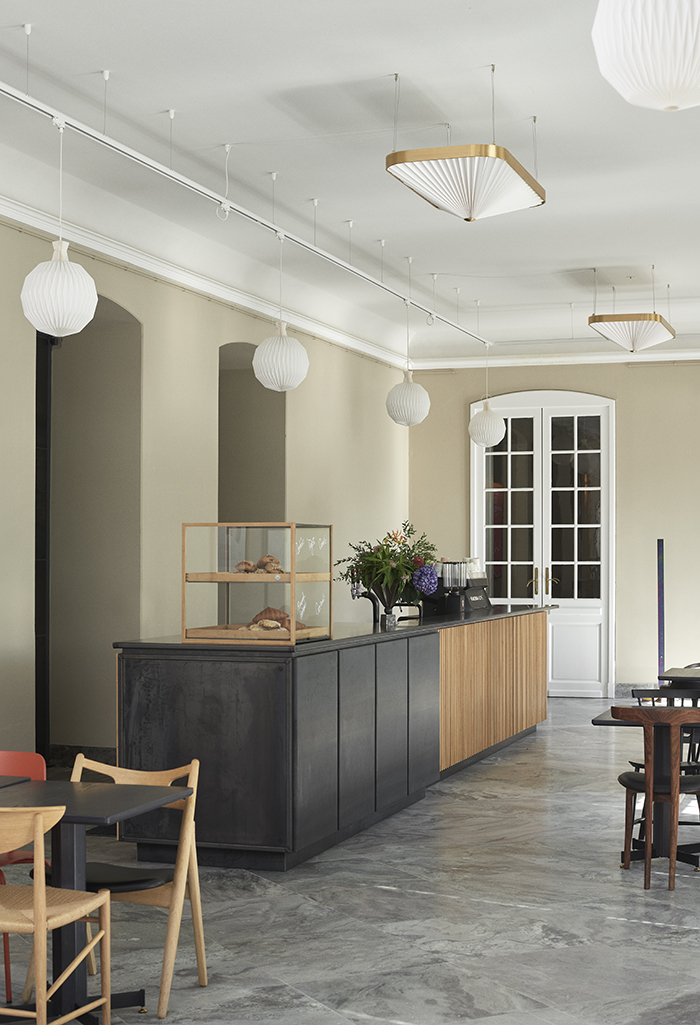
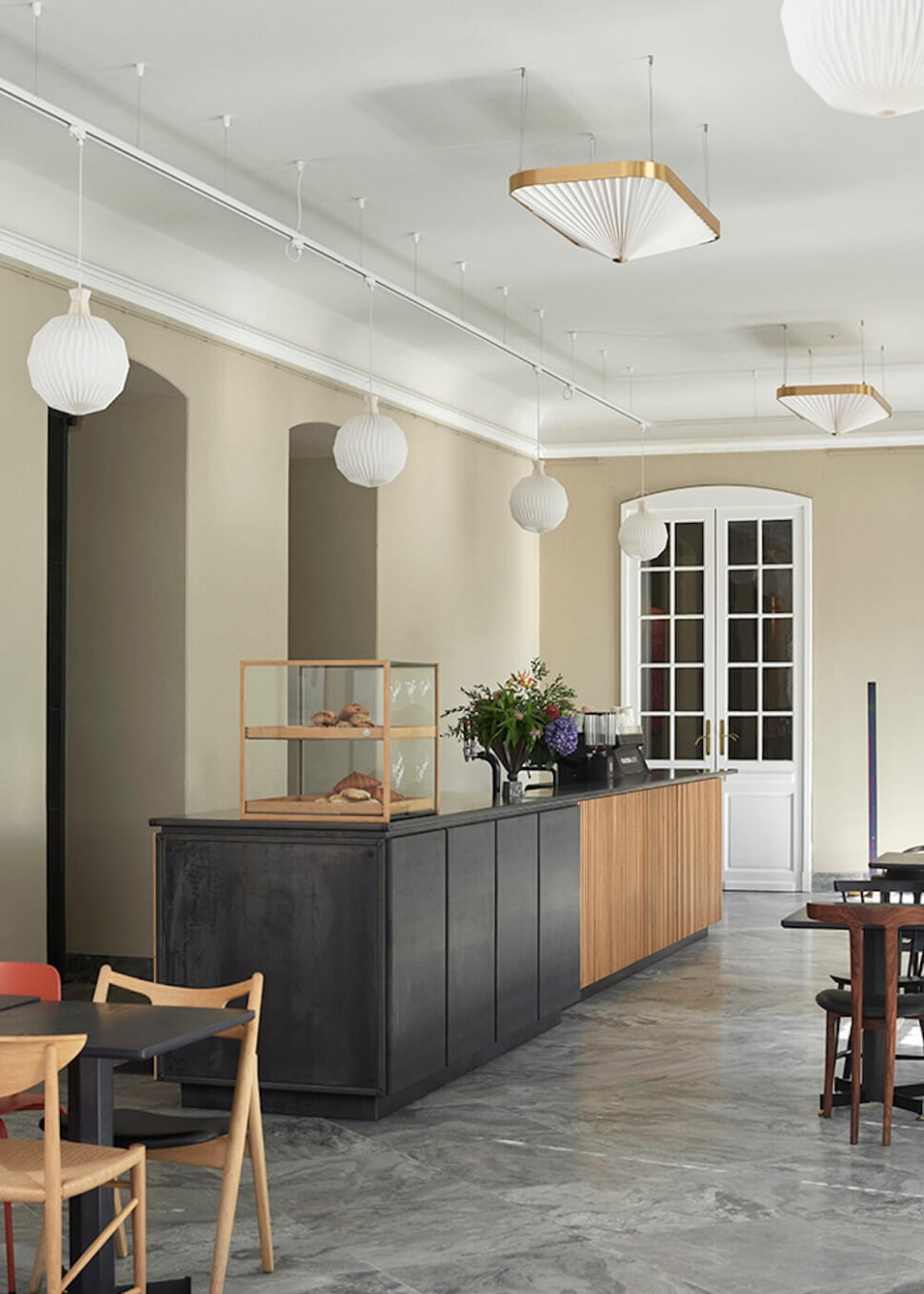
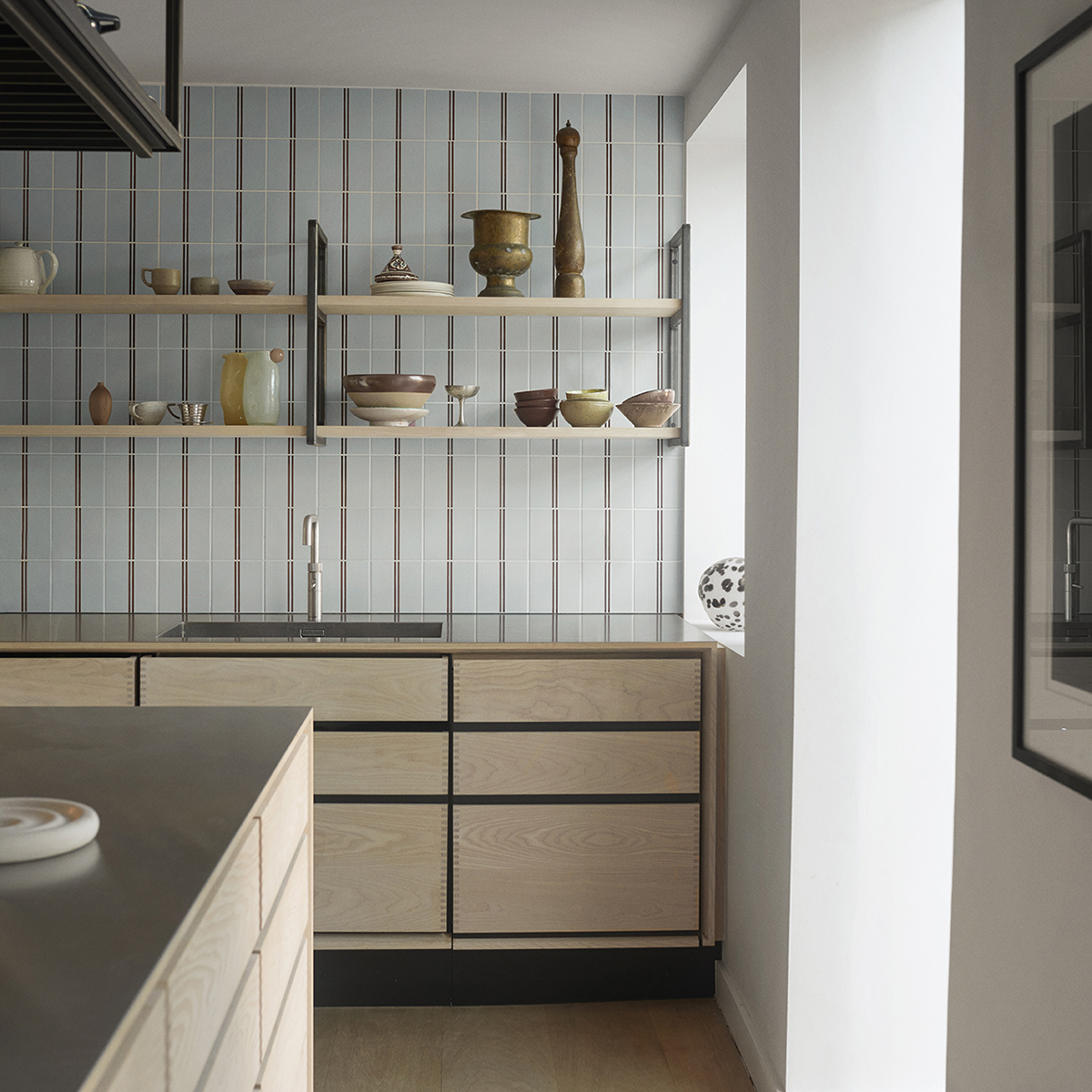
In connection with the comprehensive renovation of Designmuseum Danmark in 2020–22, OEO Studio was entrusted with the task of updating the museum’s café and shop. The result is as harmonious and elegant as it is respectful of the historical setting of OEO founders Thomas Lykke and Anne-Marie Buemann’s updated spatial and interior design.
‘Known as the father of modern Danish furniture design, architect Kaare Klint pursued a style that was epitomized by clean, honest lines, superior materials and superb craftsmanship,’ says Thomas Lykke. ‘We were inspired by Klint and his almost ascetic design expression – subtle yet majestic.’
In the 1920s, Kaare Klint worked with architect Ivar Bentsen to transform this remarkable rococo building from its former role as a hospital to a museum with magnificent collections of crafts, applied art and furniture design that continues to attract visitors from all over the world. On any given day, you can hear many different languages spoken in the oblong, high-ceilinged space of the FORMAT café.
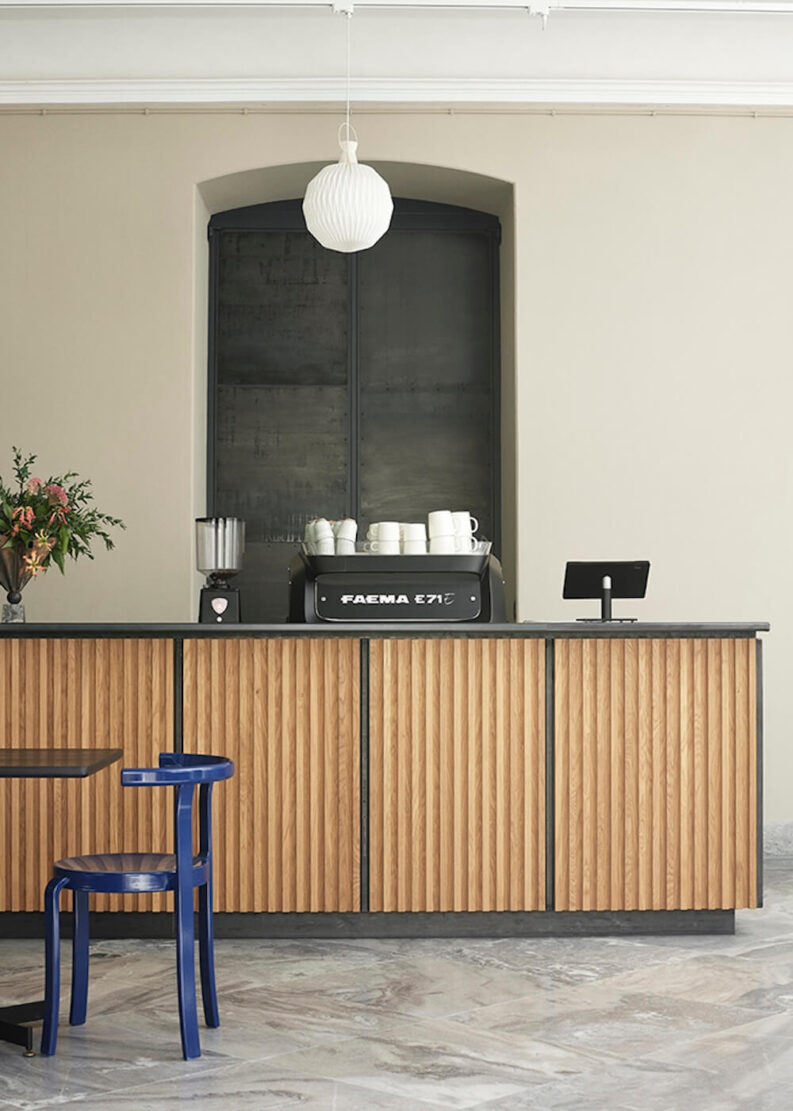
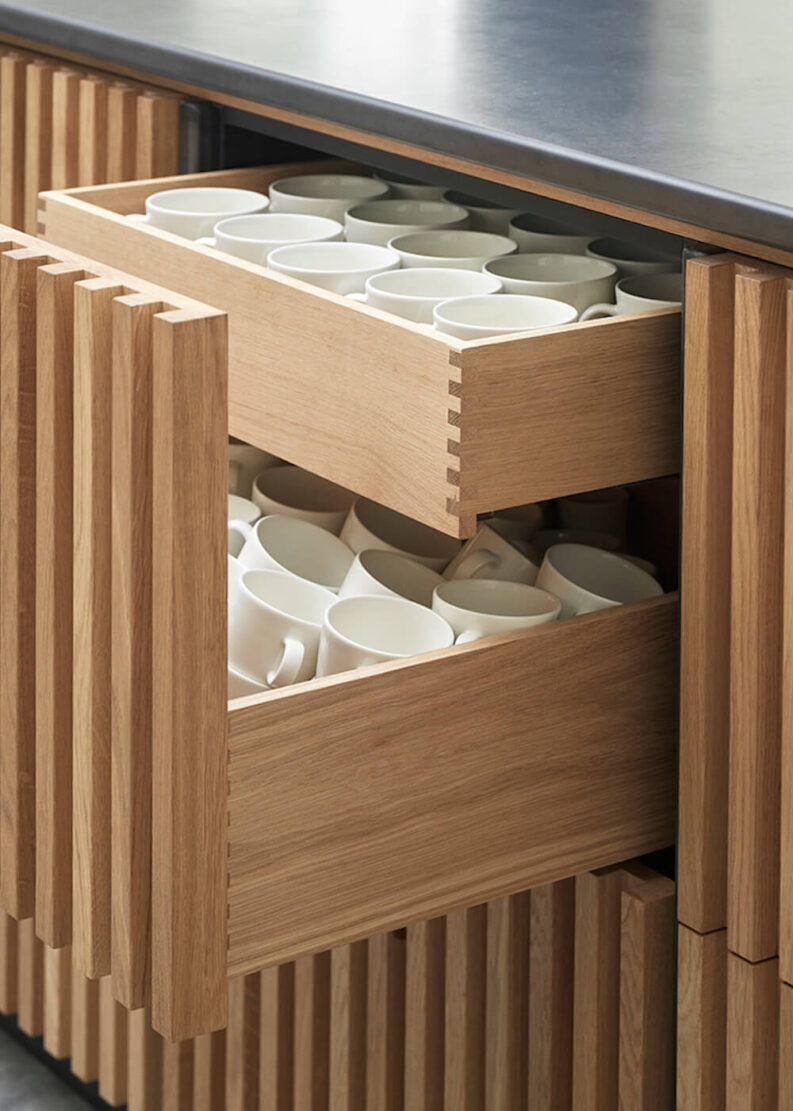
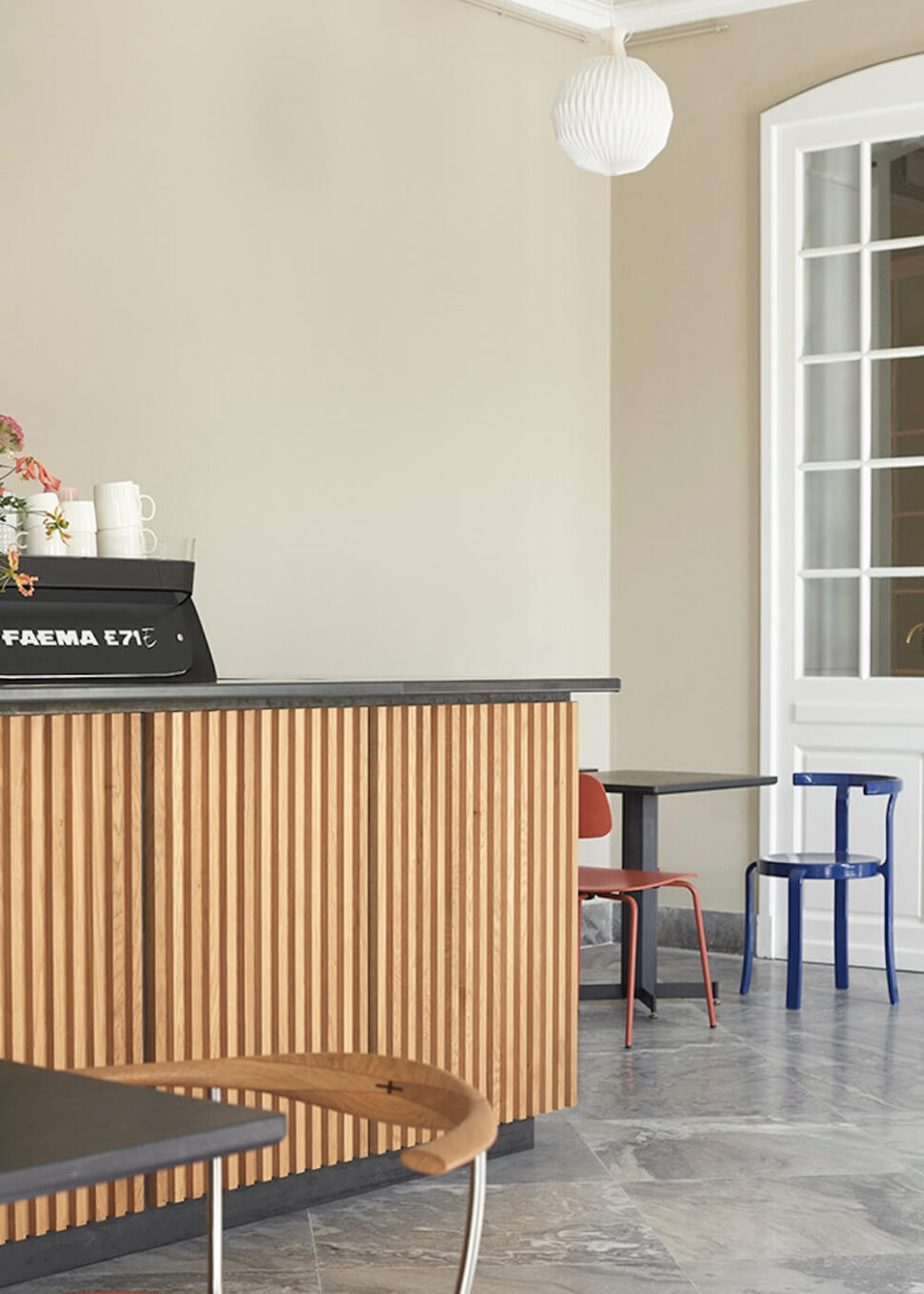
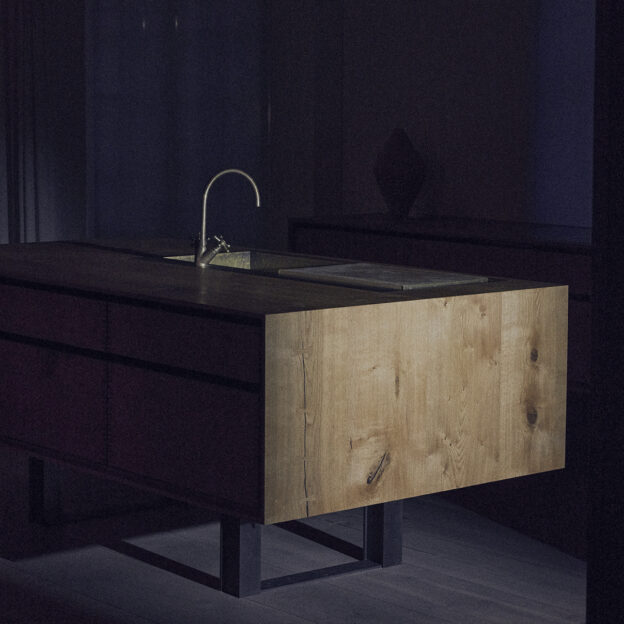
As a central feature of the lively space and diverse assembly of design chairs, which tell the story of Danish furniture design, the monumental café counter from Garde Hvalsøe offers a calm counterbalance. Based on Garde Hvalsøe’s OEO model, the counter was modified by OEO Studio in collaboration with Garde Hvalsøe to accommodate the functional requirements of a café environment and the context of this grand space that still shows Klint’s influence.
‘The starting point of our design of the café and the museum shop was to honour Klint’s work while also creating new, exciting and highly functional public spaces at the museum,’ says Thomas Lykke. The café counter pays homage to the sublime craftsmanship and Danish furniture culture that Klint and other leading furniture designers helped shape. This historical influence is combined with influences from Japanese design, which has been a consistent source of inspiration to OEO Studio for decades. The café counter’s vertical slats in solid oak are complemented by panels and a countertop in raw steel, a beautiful industrial material that is also used for the bars separating the wooden panels. The result is a tightly composed yet vibrant design that enters into a symbiotic relationship with Klint’s sense of clean lines and proportions and his love of quality materials.